
Fleet
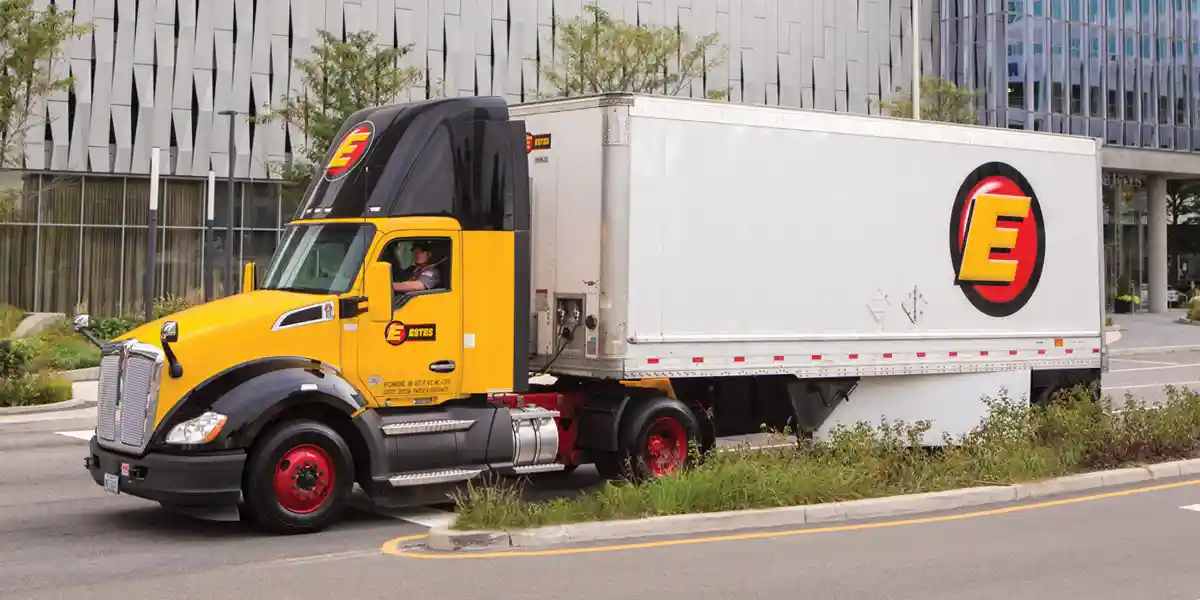
At Estes, we want to build a cleaner, more efficient fleet. That's why we continue to progress toward greener trucking by making long-term investments that reduce emissions, enhance performance, and support a more sustainable supply chain. From alternative fuels and electric vehicles to advanced technologies that lower emissions and improve efficiency, we’re delivering smarter solutions for our customers and the planet.
Growing Our Electric Fleet & Boosting Performance
- Electric Class-8 Tractors: Estes continues to invest in electric vehicles and cleaner technologies across our nationwide fleet, including 12 electric Class-8 Freightliner eCascadias operating out of our Banning, CA service center. With a range of 150-220 miles per charge, these EV trucks power our pickup and delivery routes throughout Southern California.
- Electric forklifts and jockeys: Across our network, Estes operates 14 electric yard jockeys and has over 340 electric forklifts—which now make up nearly 10% of our total forklift fleet.
- Aerodynamics: By equipping our trucks with advanced aerodynamic features, we’re improving fuel efficiency and reducing emissions across the board. With less drag and smoother airflow, our fleet moves with greater precision, lowering fuel consumption, and shrinking our carbon footprint in the process.
Explore the tab below to see how Estes is putting sustainability into motion across our fleet operations.
Greener trucking starts with how we power our fleet. That’s why we’re investing in alternative and low-emission fuels, advanced fleet technologies, and smarter practices that reduce waste and drive long-term efficiency on the road and across our operations.
Low-Emission Fuels
- Compressed Natural Gas (CNG): Our fleet includes 171 trucks that run on emission-reducing compressed natural gas (CNG)—71 of which can be powered by Renewable Natural Gas (RNG), a cleaner fuel made from biogenic methane captured from organic waste. While CNG already emits fewer greenhouse gases than diesel, RNG takes sustainability a step further with its renewable, low-carbon footprint
- ULSD Fuel: Our standard trucks run exclusively on ULSD (Ultra-Low Sulfur Diesel) which helps reduce particulate matter and nitrogen oxide emissions
- Biodiesel: In California and North Carolina, we advanced a biodiesel (B100) pilot involving five Class-8 tractors. It yielded positive results, including consistent vehicle performance and strong driver acceptance, and demonstrated potential for measurable emissions reductions
- Propane: Many of our forklifts have been converted from gasoline to cleaner-burning propane
Reducing Fuel and Energy Consumption
- Electric Equipment: We operate electric tractors and more than 340 electric forklifts, producing zero tailpipe emissions
- Idle Reduction and Driver Efficiency: PrePass, E‑ZPass, and telematics like Samsara help reduce idling and identify fuel‑wasting behaviors such as speeding, excessive idling, and over‑RPM driving
- Fuel Monitoring and Controls: Onboard fuel‑tracking technology and card‑locked fueling systems help prevent waste, reduce unauthorized use, and minimize spill risks
- Vehicle Efficiency Improvements: Aerodynamic enhancements, synthetic lubricants, low‑profile tires, governed speeds, and lightweight aluminum fuel tanks reduce drag, friction, weight, and overall fuel consumption
2025 Sustainability Report
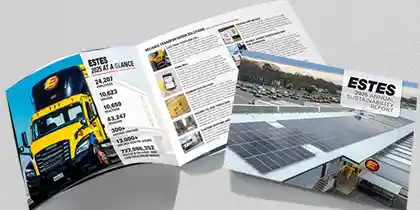
Discover the progress Estes has made toward lowering carbon emissions across our network.
2024 Sustainability Report
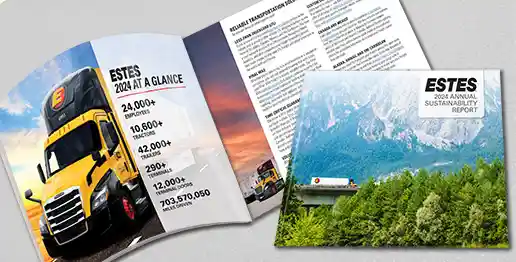
Read a summary of Estes' corporate responsibility efforts in 2024.